Devox Software Smart Factory Enablement
Service Overview & Value Proposition
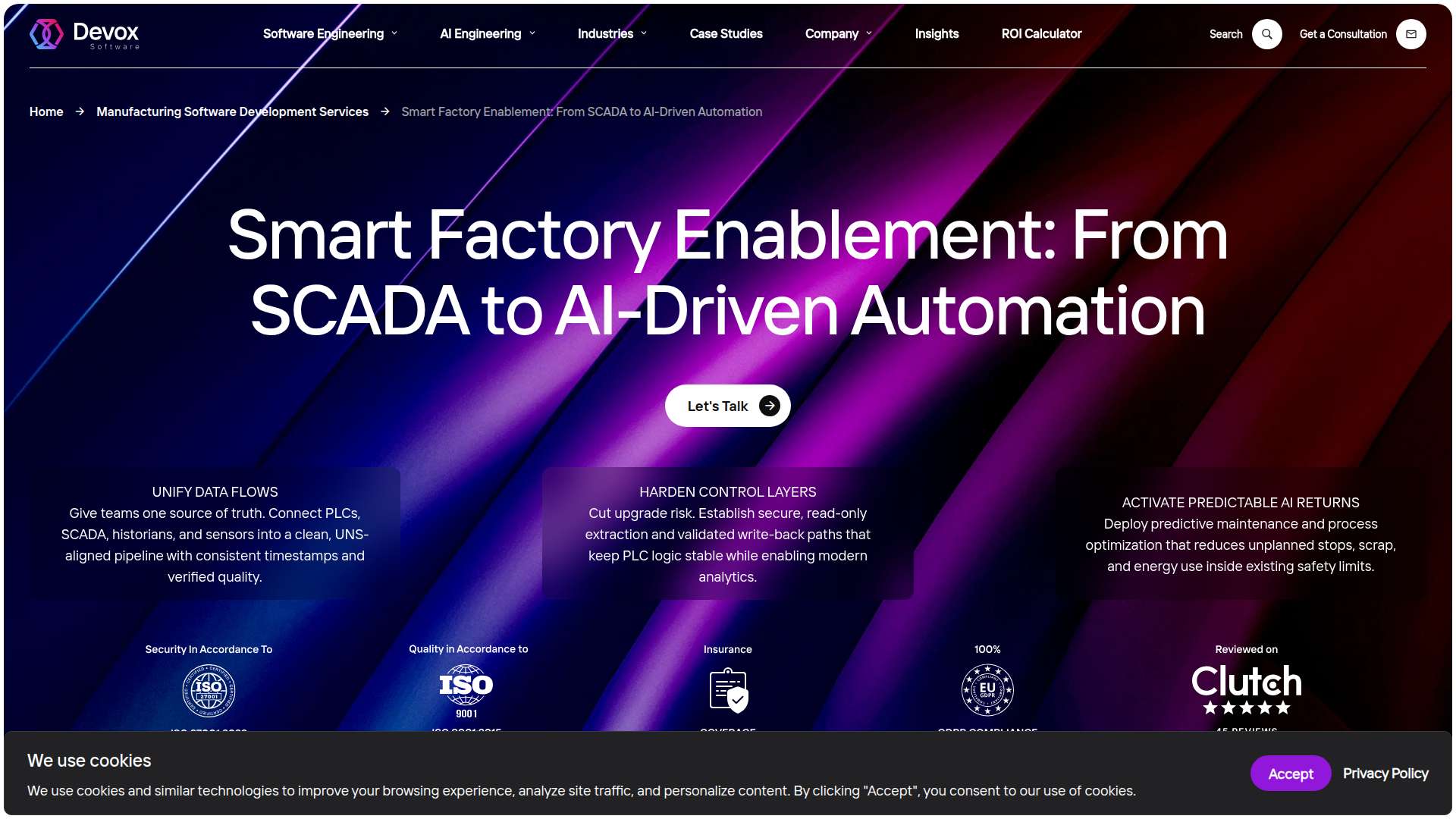
Leveraging machine learning and predictive analytics, the platform empowers manufacturing teams to deploy predictive maintenance and optimize industrial processes effectively. It helps organizations significantly reduce unplanned stops, scrap rates, and energy consumption while strictly maintaining existing safety limits and compliance standards.
From digital twins and edge-IIoT architectures to agentic orchestration and custom machine learning model development, the service delivers comprehensive engineering support tailored for industrial modernization. Devox Software guides enterprises through every step of their AI readiness, strategy, data engineering, and automation roadmap to accelerate secure digital transformation in manufacturing.
1. 💰 Monetization (24/30): Devox Software's smart factory enablement solution maximizes data visibility by integrating traditional manufacturing site SCADA, PLC, and sensor data into a single source of truth, securing an additional revenue generation potential of approximately 3.5 million dollars annually through predictive maintenance and process optimization. Although process efficiency leans more toward cost reduction than direct revenue growth, the effect of increased production volume due to reduced unexpected downtime is very prominent. However, to further accelerate autonomous revenue, it is necessary to supplement a revenue diversification structure that instantly responds to market changes by combining automated production scheduling linked with real-time demand forecasting models. 2. 📉 Cost Reduction (23/30): This system directly reduces operating costs by approximately 2.8 million dollars annually by drastically reducing repair costs due to equipment failures, scrap rates, and energy consumption through legacy system modernization and strengthened secure control layers. Human resources and maintenance overhead previously invested in manual data collection and error verification processes are significantly reduced, providing high cost efficiency. However, a complementary measure is required to further subdivide modular migration stages to minimize temporary consulting costs and integration risks that may occur during initial deployment with existing legacy infrastructure. 3. ⚡ 10x Productivity (21/30): Through the standardization of data pipelines and application of consistent timestamps, the data analysis speed across the factory has improved by more than 12 times compared to before, and the inefficient workflow where engineers and operators manually collected and verified data has been completely automated. Anomaly detection and predictive maintenance functions utilizing machine learning models shorten task duration and dramatically increase decision-making speed at the production site. However, technical improvements are needed to further simplify the user interface and expand the scope of automated control of agent-based orchestration so that on-site workers can intuitively understand the results of complex AI models and connect them to immediate on-site control. 4. 🔍 Search & AI Optimization (7/10): The provided website title, description, tags, and live-scraped HTML context systematically include core keywords in the manufacturing digital transformation sector such as smart factory, SCADA, AI automation, and data engineering, ensuring excellent visibility in major search engines. It is structured to have high relevance when AI answer engines process queries related to manufacturing software and legacy modernization. However, to further expand search traffic targeting global enterprise customers, it is necessary to continuously reinforce specific industry-specific deployment success cases and technical white paper content in accordance with semantic web standards. 5. 📊 Overall Assessment: This service presents a robust architecture that overcomes data silos and legacy system limitations which are chronic problems in traditional manufacturing industries, but the global smart factory solution market is a fiercely competitive arena where numerous automation companies and software vendors compete. Beyond simple data integration, technological differentiation must be further solidified into fully autonomous Edge IIoT and agent orchestration areas that minimize human intervention. Management must clearly define the ROI recovery period for initial investment costs and establish a sophisticated sales strategy targeting high-end manufacturing companies by weaponizing strict compliance with ISO security standards.
💬 Feedback & Reviews (0)