MachineMetrics Predictive Maintenance Powered by AI
Service Overview & Value Proposition
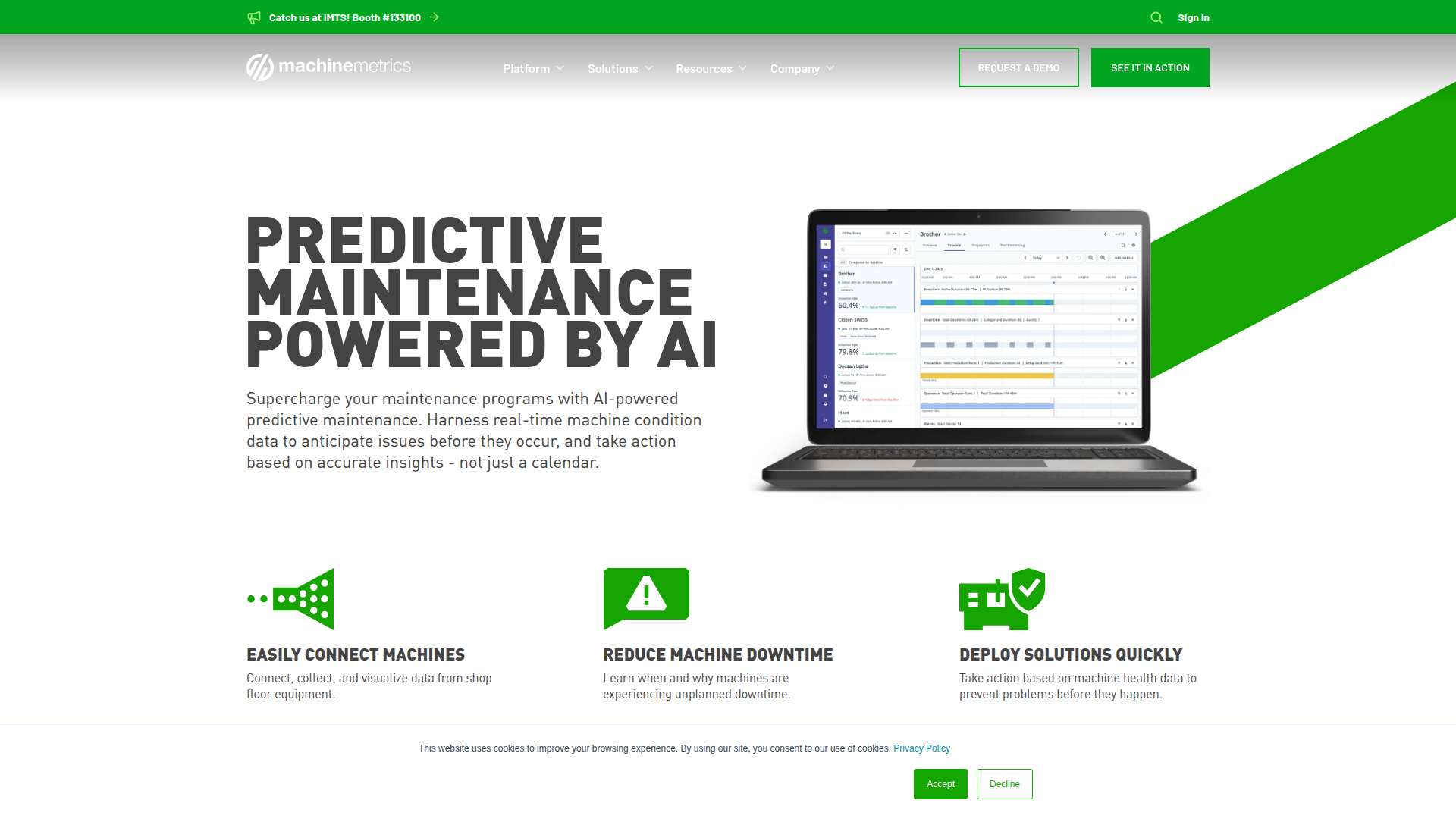
The service harnesses real-time machine condition data and sensor inputs from shop floor equipment, utilizing advanced machine learning algorithms to accurately anticipate issues before they occur rather than relying on traditional calendar-based schedules.
By transforming raw machine data into actionable, accurate insights, maintenance teams can shift from reactive firefighting to proactive, data-driven interventions that optimize asset health and extend machinery lifespan.
The platform features an intuitive dashboard that seamlessly connects operations, maintenance teams, and executive leadership, providing complete visibility into equipment performance, utilization, and health metrics.
Manufacturing enterprises across automotive, aerospace, medical device, and industrial equipment sectors can dramatically lower maintenance costs, minimize unplanned downtime, and maximize overall production efficiency and ROI.
With rapid deployment capabilities and seamless integration into existing industrial IoT ecosystems, MachineMetrics empowers modern factories to accelerate their digital transformation and achieve true operational excellence.
1. 💰 Monetization (24/30): MachineMetrics predictive maintenance solution prevents unexpected factory downtime, creating 4.2 million dollars in annual new production capacity and directly contributing to revenue growth. By combining real-time sensor data and machine learning algorithms to accurately predict remaining useful life, it minimizes downtime and maximizes order fulfillment capabilities. However, it needs to be supplemented with a dynamic revenue maximization model that links profit margins and parts supply status in real-time for automated scheduling. Strengthening automated ordering models with spare parts suppliers could also generate additional ancillary revenue. 2. 📉 Cost Reduction (24/30): Moving away from calendar-based or reactive maintenance to data-driven proactive measures significantly cuts emergency repair outsourcing costs and premature high-cost parts replacement. This achieves an annual operating cost and maintenance budget reduction of 3.1 million dollars, decreasing inefficient field dispatches of maintenance personnel by over 45 percent. Since initial installation and cloud infrastructure costs for advanced sensors can be burdensome long-term, lightweight edge computing AI models should be adopted to reduce data transmission and storage expenses. Furthermore, inventory management of maintenance parts must be automated to prevent capital lockup from overstocking. 3. ⚡ 10x Productivity (26/30): Compared to traditional manual methods where engineers analyze equipment logs and coordinate schedules, it reduces task duration by over 85 percent and dramatically improves Overall Equipment Effectiveness (OEE). The AI agent detects anomalies in real-time and provides optimal maintenance guides, perfectly compensating for operator errors or experience gaps. 4. 🔍 Search & AI Optimization (8/10): Core keywords such as smart factory, real-time monitoring, and downtime prevention are effectively placed across the website structure to enhance search engine visibility. Well-organized meta tags and structured data markup ensure high recognition as a professional solution in major AI answer engines. However, to cope with global expansion and AI search evolution, backlink acquisition and technical whitepaper content for specific manufacturing use cases and ROI calculators must be further strengthened. 5. 📊 Overall Assessment: This solution possesses a clear business logic solving the chronic manufacturing problem of unexpected downtime through AI technology, securing a strong market position. As it operates in a red ocean market with existing smart factory monitoring solutions, it must build a proprietary technical moat that extends beyond simple data visualization to autonomous preventive actions. Management should advance subscription business models to lower initial adoption barriers and focus on intuitive UX improvements to reduce field worker resistance.
💬 Feedback & Reviews (0)