In the modern business environment, the initial touchpoint with customers—lead response and real-time communication—has become the most critical factor determining corporate survival. Countless companies secure valuable leads through marketing only to experience the inefficiency of losing potential customers due to staff shortages, missed calls, or delayed follow-ups. To fundamentally solve this problem in the global tech market, SalesAi has emerged as a next-generation AI-native solution. Moving far beyond the limitations of simple chatbots, this platform builds a 24/7 professional AI voice and SMS agent team that completely automates the entire sales and customer engagement funnel of an enterprise.
The agent ecosystem provided by SalesAi consists of dozens of specialized AI personnel tailored to specific roles. Amy, the inbound lead agent, makes phone calls and sends text messages to every incoming lead within seconds, ensuring that not a single opportunity is missed. Furthermore, support agent Mark resolves recurring customer inquiries 24/7 in real-time, while Mason, the re-engagement agent who wakes up dormant leads, Kai, who handles customer onboarding, and Jamahal, who drives 5-star reviews, work organically together to seamlessly fill any gaps in the sales and support funnels.
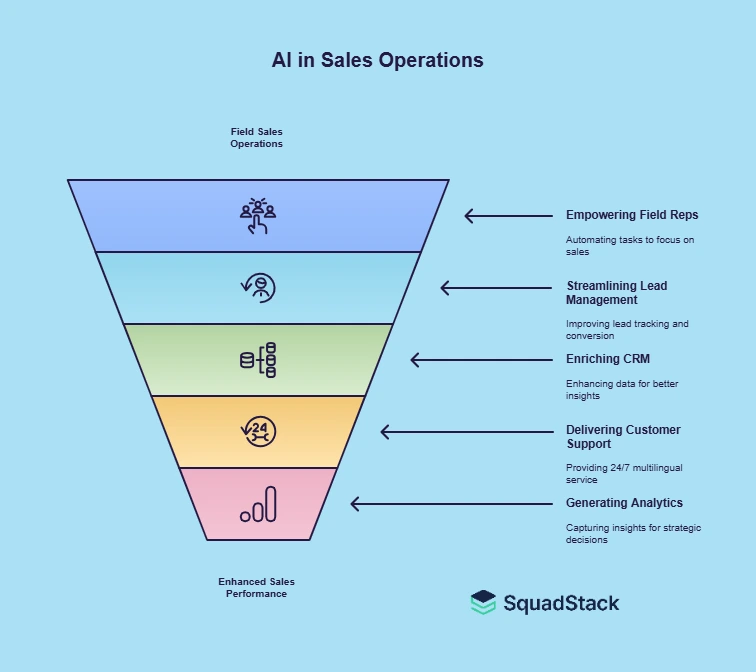
The first innovation that this multi-agent system brings to business is explosive growth in autonomous monetization. Traditional sales organizations struggle to respond immediately to inbound leads arriving at night or on weekends due to operating hour limitations and staff shortages. However, SalesAi's autonomous agents operate relentlessly around the clock, fundamentally preventing missed calls or neglected leads. Through this, companies can secure an estimated 1.5 million dollars in additional annual revenue generation opportunities. In particular, because the inbound lead agent and quote tracking agent manage the customer conversion funnel in real-time, the overall conversion rate soars by over 35%. However, to deeply understand customers' detailed needs or churn signals during voice-based interactions, advanced refinements in real-time sentiment analysis and customized upsell recommendation algorithms are needed. Additionally, for complex enterprise contracts, a sophisticated hybrid process is required where AI performs initial filtering before smoothly handing off to human sales experts.
The second crucial innovation is the maximization of operational cost reduction. By decisively replacing call center operating personnel and agents handling repetitive routine tasks, companies can directly save up to 1.2 million dollars annually in labor and outsourcing costs. A hiring cost reduction rate reaching 90% and a system uptime of 99.9% clearly demonstrate overwhelming operational efficiency compared to traditional human resource management models. Nevertheless, to minimize engineering overhead during initial platform builds and custom agent setups, the completeness of a self-service UI where users can directly assemble and test agents in a no-code environment must be further enhanced. Moreover, caching and lightweight model routing strategies are essential to optimize communication costs and LLM token expenditures during massive call surges. Sustainable cost reduction in the true sense is achieved when such cost structure optimizations accompany operations.
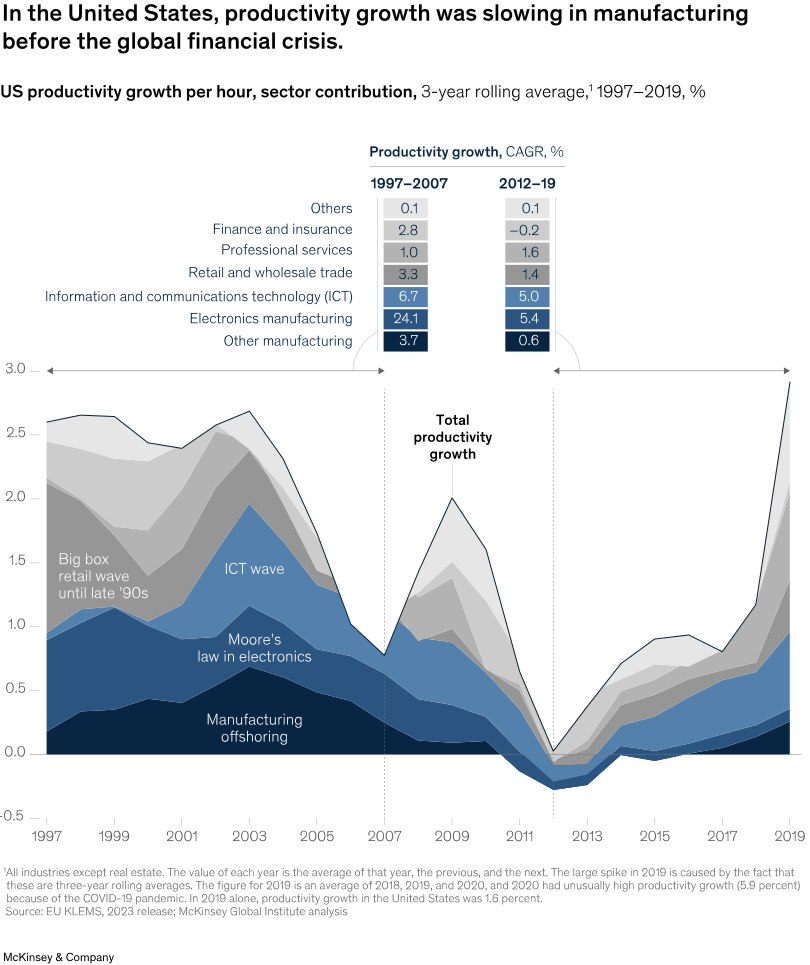
The third core value is a tenfold or greater innovation in productivity. Through lead response within seconds and 24/7 tier-1 support, customer response wait times are reduced by 95% compared to before, and multi-agent-based task automation dramatically boosts overall team productivity. Specialized role-based agents such as Mark, Amy, and Kai cooperate organically to cover the entire funnel from lead collection to onboarding and review collection without blind spots. However, to prevent potential context loss during data sharing among multiple agents, real-time synchronization performance with a unified knowledge base must be further strengthened, and technical improvements to shorten the training cycle of domain-specific acoustic models for higher speech recognition accuracy must accompany this. Progressing toward complete automation by reducing human operator intervention close to absolute zero through such precision workflow control remains the future objective.
In comprehensive terms, SalesAi goes far beyond the level of simple chatbots by establishing a highly polished multi-agent ecosystem that autonomously executes an enterprise's entire sales and support funnels. Corporate management can capture both cost reduction and revenue growth simultaneously through this solution, and should reinforce self-fine-tuned model adoption and enterprise security certifications to build a proprietary voice AI technology moat moving forward. For all businesses wishing to break free from repetitive routine tasks and focus entirely on the core essence and growth of their business, this platform serves as a powerful option. Visit https://salesai.com/ right now and experience the powerful performance of an autonomous AI team directly through the live demo.
