In the modern business environment, the greatest challenge knowledge workers face every day is how to maximize productivity and derive meaningful business insights amidst a flood of massive data and complex repetitive tasks. From marketers and financial analysts to data scientists, countless professionals have spent immense amounts of time wrestling with complex Excel formulas, learning statistical tools, and using separate design tools to draft reports. There is now an innovative platform that steps forward to solve this chronic workflow bottleneck once and for all. Developed by a cutting-edge AI lab based in San Francisco, California, Julius AI transcends the boundaries of a simple chatbot, serving as a next-generation all-in-one AI workspace that provides data analysis, Excel modeling, website and app creation, automated presentation slide generation, and multimedia content creation all within a single seamless integrated space.
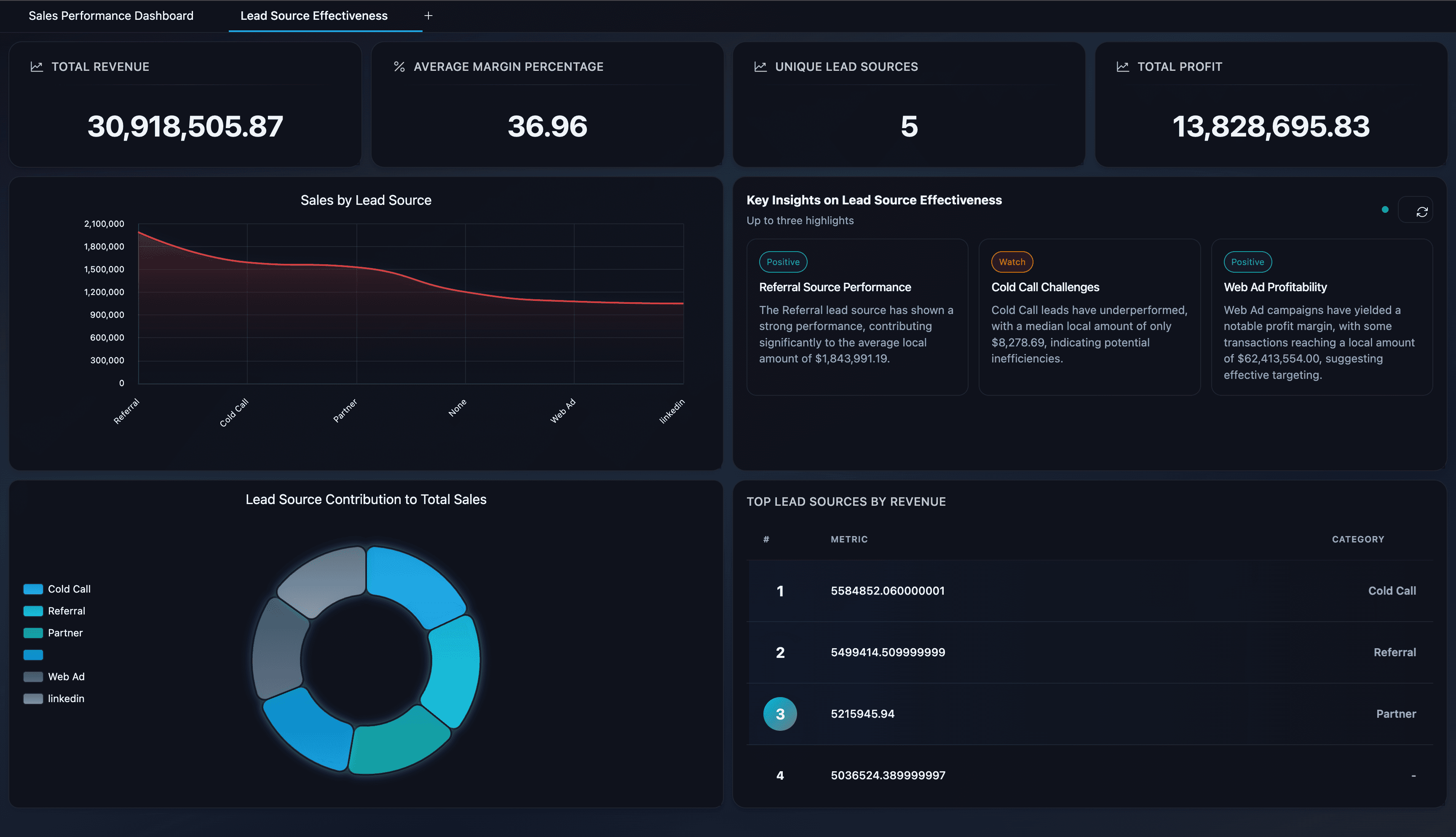
The most compelling feature of this platform is its realization of a true natural language-based interface. When users ask questions or issue instructions in everyday language, the high-performance AI agent embedded within the platform instantly analyzes large-scale datasets, manipulates Excel spreadsheets with ease, and derives professional insights. Consequently, even non-experts without knowledge of programming languages, complex statistical packages, or advanced Excel macros can achieve data scientist-level analytical results with just a few mouse clicks and natural language typing. Going beyond mere data analysis, it boasts astonishing scalability, automatically composing polished presentation slides based on collected information and generated reports, while allowing users to build websites and apps in mere minutes. The seamless integration of generative multimedia capabilities that create high-end images and videos simply through text inputs maximizes the efficiency of the entire content production pipeline from planning to final deliverables.
What is the business value of a service that fundamentally disrupts the way knowledge work is performed? The first core metric to examine is its overwhelming impact in terms of autonomous monetization analysis. In the process of maximizing a company's business value, Julius AI enables rapid data-driven decision-making by empowering non-experts to immediately execute complex data science tasks. Through this, it is estimated that enterprises can optimize marketing and sales strategies in real-time, meaningfully boost conversion rates, and generate new business opportunities and additional revenue amounting to 3.4 million dollars annually. Of course, to fully blossom this potential, it must be supported by the advancement of proactive revenue-generating autonomous agent features that directly integrate with a company's real-time sales data to automatically generate optimal offers, moving beyond simple query responses. Furthermore, if a commercial pipeline is complemented to automatically package valuable business insights derived from user prompts into report packages for immediate distribution to external partners and clients, the impact will be unimaginable.
The second aspect to analyze is the cost reduction effect directly tied to corporate financial health. By having AI drastically automate repetitive and tedious tasks previously performed manually by high-cost professionals such as data analysts, web developers, and content creators, companies can innovatively cut operational costs. Because AI completes Excel modeling validation, report drafting, and presentation slide design tasks that used to take hundreds of hours in just a few minutes, it can achieve miraculous cost-saving effects, slashing total labor and outsourcing service costs down to the level of 2.8 million dollars annually. In addition, since it securely supports powerful enterprise-grade data connectors such as Postgres, Snowflake, and SQL Server, there is no need to waste numerous resources building separate complex data pipelines. However, to elevate this cost-efficiency to the next level, the introduction of lightweight model routing systems and on-premise hybrid deployment options capable of autonomously optimizing API costs according to large token usage must be considered. Moreover, the reinforcement of strict permission management and validation layers is essential to fundamentally block hidden administrative costs caused by potential data errors or revision work when internal non-experts handle AI tools.
In the third pillar of 10x productivity innovation, the platform also demonstrates dazzling achievements. The all-in-one workspace structure organically combining browser agents, website builders, and video and image generation features elevates the way knowledge workers operate to an entirely new dimension. It can autonomously handle research, data visualization, and website building processes that previously took days or weeks within a single chat window, showing an overwhelming productivity impact that shortens average task completion time by over 15 times. Particularly, operating on top of a top-tier security system that has acquired SOC 2 Type 2 certification, it secures the reliability to safely handle sensitive data where security is paramount, such as financial institutions and advanced scientific research fields. Furthermore, if multi-agent orchestration functions—where multiple sub-agents organically cooperate to completely and autonomously accomplish entire complex projects from planning to final deliverables beyond performing single tasks—are advanced, it will herald the dawn of a true autonomous enterprise.
In terms of search and AI discoverability optimization, the platform displays near-perfect design. The website's metadata and semantic structure are brilliantly optimized with core keywords precisely targeting user search intent. Structured documents and detailed feature-specific guidelines are faithfully constructed so that major generative AI search and answer engines like Perplexity and ChatGPT can perfectly recognize it as an Excel AI and data analysis solution. The brand identity as a San Francisco-based AI lab and clear use-case categories maximize the crawling efficiency of search algorithms and AI bots, and if continuous expansion of multi-language supported GEO optimization and dynamic schema markup reflecting real-time user interaction data is added to prevent exclusive misrecognition in the future global enterprise market, its dominance within the search ecosystem will become even more solid.

Taken as a whole, Julius AI transcends simple convenience improvement tools, presenting a textbook answer for an advanced all-in-one AI workspace that resolves every bottleneck from data analysis to content creation faced by knowledge workers. It has already proven clear financial savings effects and business autonomation possibilities, solidly equipping itself with the technical foundation to evolve into a fully autonomous enterprise agent in the future. Management should boldly adopt this platform as an enterprise standard productivity tool to accelerate company-wide operational speed while actively pursuing strategies to build customized workflows for each department utilizing its proprietary custom agent build features. For tech professionals and corporate leaders who wish to experience the future of knowledge work ahead of time and directly feel dozens of times more business innovation, we strongly recommend visiting the official live service at https://julius.ai/ right now and checking out the astonishing world of productivity delivered by the next-generation AI workspace.
