As artificial intelligence technology continues to make remarkable strides and deeply permeate our daily lives and industries alike, the vast majority of language models have remained constrained by an invisible yet formidable barrier. This limitation stems from the structural requirement that models must operate strictly within the boundaries of rigid formats defined in advance by humans and manually inputted examples. Millions of diverse APIs and tools exist across the world, with new forms of programs and documents pouring out at every single moment. However, conventional systems required developers to manually modify code and inject complex in-context examples into prompts just to utilize a single new tool. This manual-heavy approach created critical scalability bottlenecks in real-world business environments where large toolsets must be managed, ultimately hindering the true autonomy of AI.
It is precisely at this juncture that AutoTools has emerged, instantly capturing the intense attention of artificial intelligence researchers and engineers worldwide. This innovative framework provides a mechanism that allows large language models to autonomously parse and analyze massive documentation and toolsets without human intervention, automatically encapsulating them into immediately callable functions. Language models are no longer passive response generators bound to predetermined scripts. They are evolving into genuine autonomous agents capable of exploring necessary tools on their own, formulating optimal plans to solve complex problems, and seamlessly executing multi-conditional workflows.
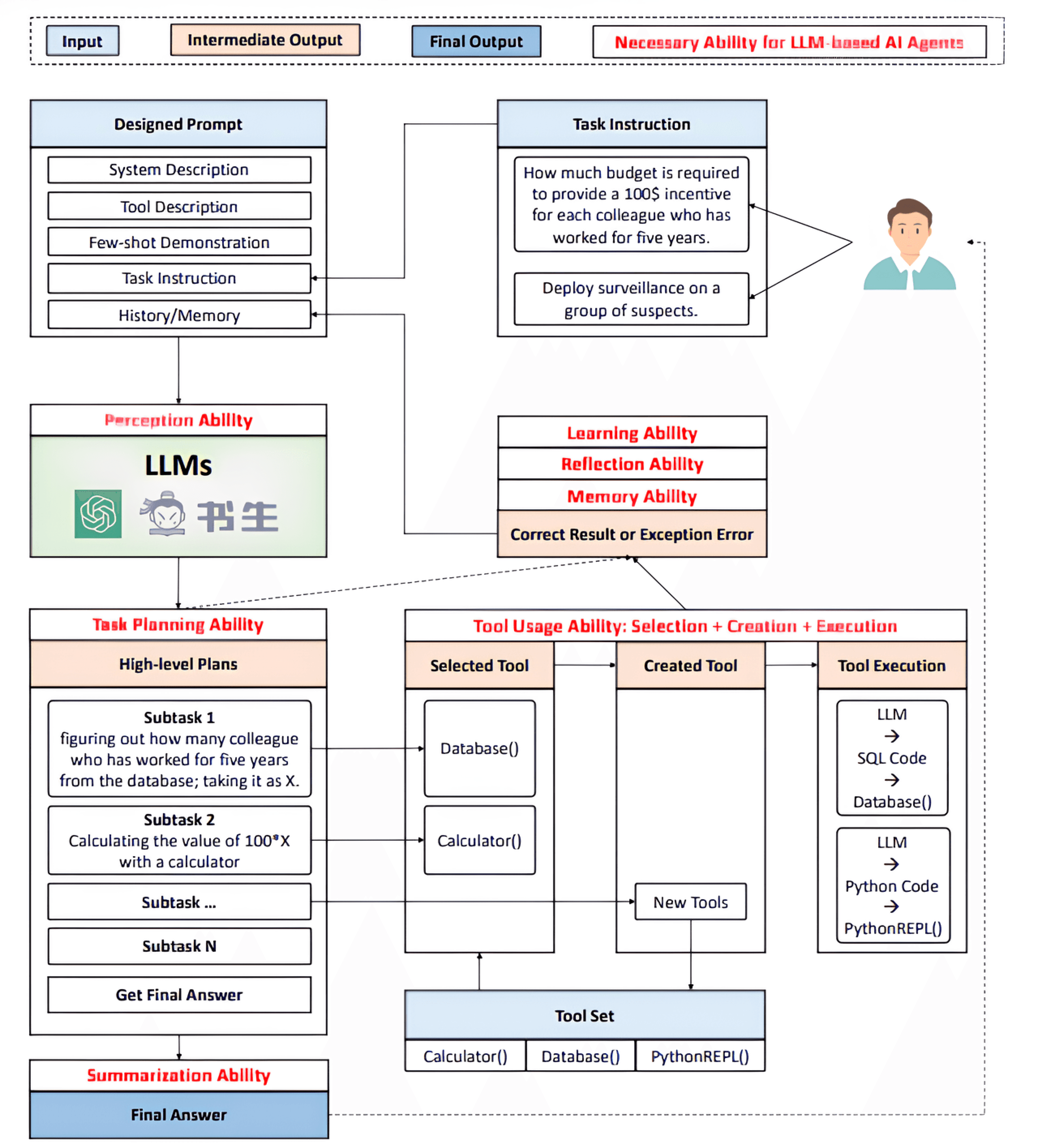
The core of the architecture presented by AutoTools lies in its automated encapsulation and efficient function library structure. In conventional approaches, developers had to spend countless hours manually defining input and output specifications for APIs and aligning formats. However, AutoTools utilizes documentation itself as a high-dimensional knowledge source that the AI can directly comprehend. The parsing engine embedded within the system analyzes text-based tool specifications and converts them into immediately executable program modules, securely storing them in a centralized library. When a user requests complex data processing or external integration tasks, the agent selects and combines the most appropriate tools from the entire toolset, weaving together a logical execution plan.
This process closely resembles how a skilled software engineer references multiple libraries to build a single massive application. The only difference is that all these complex cognitive processes and coding tasks are accomplished autonomously in a matter of seconds. Even in situations requiring multi-conditional data analysis or real-time external service integration, the agent invokes functions on its own and uses the results as feedback to organically coordinate subsequent steps. This grants the AI powerful survival capabilities to adapt and thrive even within the rough and unstructured environments of the wild.
From a business perspective, the innovation brought by AutoTools goes far beyond mere technological curiosity, directly impacting a corporation's financial structure and revenue generation methods. First, in terms of autonomous monetization analysis, this framework drastically shortens the time it takes for enterprises to bring new services and API integration features to market. Because the model parses and executes toolsets on its own without manual prompt writing or human expert intervention, it is projected to generate an estimated 4.2 million dollars in new additional revenue annually through automated custom API integration and intelligent agent deployment services. Enterprises can easily commercialize customized agents that respond in real-time to demanding customer requirements, securing a pioneering position in new business models.
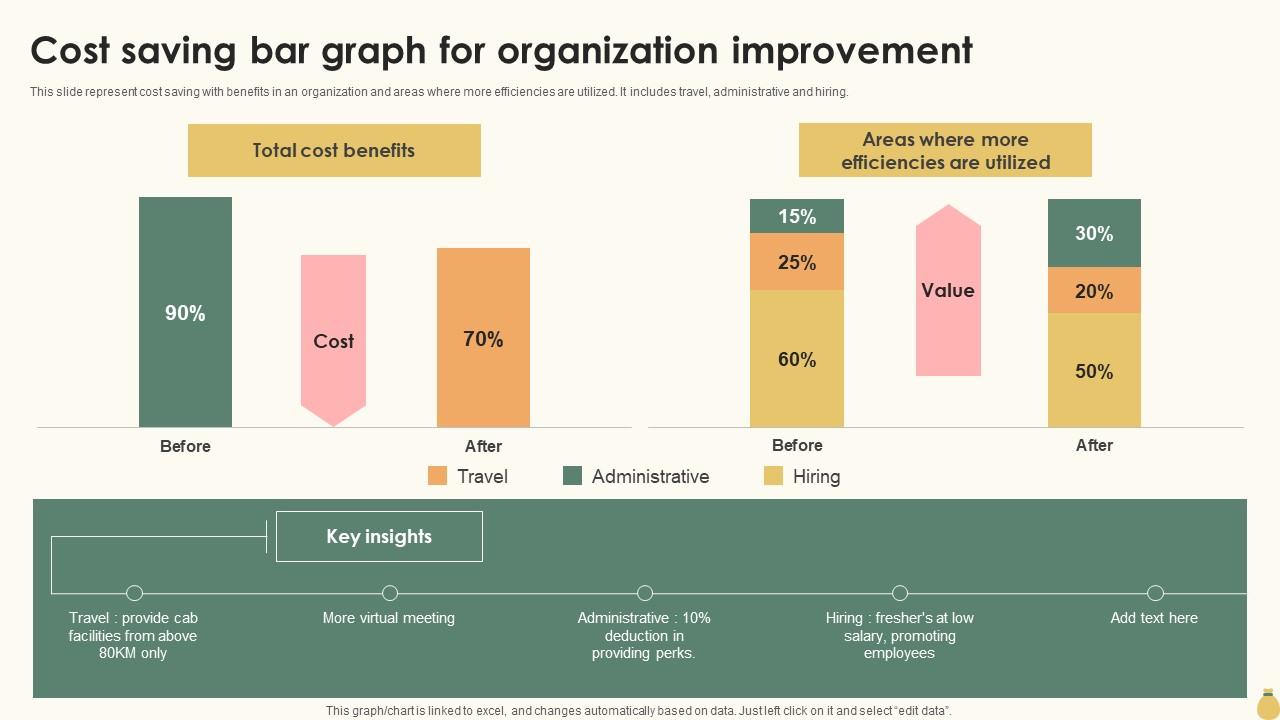
Second, in terms of operating cost reduction, AutoTools drastically lowers the exorbitant labor and outsourced development costs previously poured into complex tool integration work and manual in-context example production. By replacing countless API document analysis and format definition tasks with automated encapsulation mechanisms, companies can directly save up to 3.5 million dollars annually in operational resources and engineering costs. Human errors occurring during repetitive integration testing and debugging processes are also minimized, resulting in an astonishing reduction of maintenance costs by over 65 percent compared to conventional methods. Although minor challenges remain, such as refining self-diagnostic logic to handle changes in external API specifications or standardizing onboarding guides, the framework holds overwhelming economic value by fundamentally cutting out wasteful elements.
Third, in terms of 10x productivity innovation, the fully autonomous workflow where language models select tools, establish plans, and complete execution on their own has improved task processing speed by over 12 times compared to previous standards. It eliminates the stages where humans had to manually write and test code for complex multi-conditional data processing or external integration tasks, deriving immediate results through real-time function encapsulation and program generation. Thanks to the function library structure that efficiently manages massive environments with hundreds of tools, engineers can break free from repetitive routine work and focus on higher-level creative designs.
In terms of search and AI visibility, this framework operates on the Hugging Face Spaces platform, actively leveraging clear titles and professional tool-learning related hashtags to secure outstanding visibility. Core keywords in the fields of large language model agents and function calling are placed in optimal positions, effectively driving the influx of developers exploring technical documents and open-source repositories. Structured explanations and architectural diagrams are well-configured so that artificial intelligence answer engines can accurately index the automated encapsulation concept and autonomous tool learning capabilities, raising expectations for continuous global developer ecosystem expansion.
Overall, AutoTools has established a monumental technological turning point, transcending the limitations of conventional language models reliant on manual human intervention and enabling AI to autonomously acquire and utilize tools in diverse real-world wild environments. From the perspective of management and developers, this framework is a high-value AI system capable of simultaneously achieving dramatic leaps in development productivity, cost reduction, and new revenue generation. By further strengthening enterprise-grade security and expanding multimodal tool support in the future, it will be able to build an even stronger technological moat.
Take this opportunity right now to introduce this innovative autonomous agent into your work environment and development projects, turning imagination into reality. If you want to directly experience the future of AI that evolves on its own beyond the limits of technology, visit https://huggingface.co/spaces/mangopy/autotools right now and discover the powerful features of AutoTools.
