The legal industry is traditionally a knowledge-intensive domain centered around extensive document review and complex case research. The familiar scene of countless junior lawyers and research assistants spending sleepless nights hunting for a single decisive fact among millions of documents is now undergoing a massive technological inflection point. Garnering significant attention in the global tech market, Paxton AI is an all-in-one AI legal assistant service specifically designed for modern legal professionals and law firms, revolutionizing the entire process from legal research to document drafting and analysis, thereby rewriting industry standards.
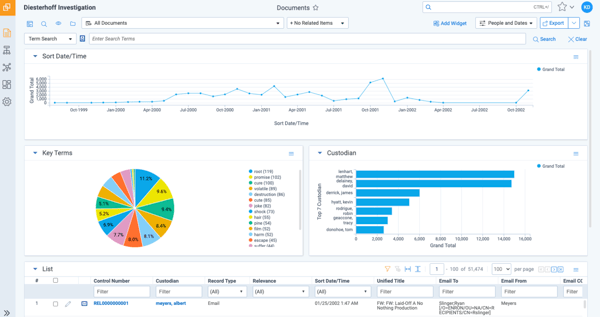
Legacy legal research platforms have long remained constrained by traditional Boolean search methods. Keyword-dependent approaches easily miss intricate contexts and struggle to grasp the organic links between massive case files and individual matter records. In contrast, Paxton AI introduces an autonomous RAG architecture designed to keep the matter's unique facts, procedural posture, and jurisdiction at the center, enabling all data to operate organically within a single unified workspace. Users can immediately extract sophisticated, context-driven insights, moving far beyond cumbersome manual searches.
The business impact delivered by this service goes far beyond merely accelerating task speed, completely reshaping law firms' revenue models and cost structures. The first area of note is autonomous monetization analysis. Targeting legal professionals and large law firms with a high-value SaaS model, Paxton AI holds the potential to generate $42 million in new subscription revenue annually. By offering specialized legal agent services that go beyond simple document summarization to include case analysis, medical chronologies, and medical billing summaries, it enables premium pricing and can drive average contract value per customer up by over 35 percent. However, further segmenting flexible usage-based pricing or pay-as-you-go options to accommodate small-to-medium-sized law firms and solo practitioners beyond large firms would help lower customer churn and maximize market share through dynamic pricing tailored to various case scales and budgets.

The second core value is overwhelming operational cost reduction. By drastically cutting down the hours spent by junior lawyers and research assistants on manual case investigation and document drafting, it achieves personnel and operational resource savings equivalent to 28 million KRW annually for a mid-sized firm. By compressing the man-hours required for repetitive administrative tasks and fact-checking, it creates an environment where lawyers can focus on high-value strategy formulation and decision-making. Nevertheless, to minimize conversion costs and time losses incurred during the initial onboarding phase of integrating with a firm's legacy document management systems and conducting security training, automated migration tools must be further enhanced. Building an end-to-end pipeline that completely eliminates manual data entry holds the potential to reduce operational costs by an additional 15 percent or more.
The third aspect is a 10x or greater productivity innovation. Accelerating text analysis and legal research speeds by over 12 times compared to traditional methods, it maximizes operational efficiency through a context-based search engine that transcends Boolean search limitations and a multi-agent structure. Automating medical chronology generation and complex contract review workflows significantly lowers the burden on practitioners while boosting accuracy. However, because a bottleneck still exists where human lawyers must perform final reviews on AI-generated legal document drafts or case interpretations, a reliability scoring system that verifies legal accuracy in real-time must be advanced. Strengthening the loop where autonomous agents independently detect and correct errors could evolve the system toward a fully automated stage with minimal human intervention.
Behind these technological advantages lies rigorous security compliance. Given the sensitive nature of legal work, data confidentiality and integrity are non-negotiable top priorities. Paxton AI operates within a secure closed model and is equipped with top-tier security frameworks including SOC 2 compliance, ISO standard adherence, and HIPAA regulation fulfillment, preemptively eliminating the data leakage concerns that law firms worry about most. This meticulous security architecture serves as a powerful moat in the global legal market, earning the trust of numerous large law firms and corporate legal departments.
In summary, Paxton AI precisely targets the complex and repetitive workflows of the legal industry, proving an exceptionally high level of technical maturity and business impact. To further global expansion and strengthen a monopolistic position in the legal corporate market, enhancing collaborative functions among autonomous agents and continuously improving tailored legal document auto-generation pipelines will position it as a game-changer in the legal tech ecosystem. For legal professionals looking to break free from the burdens of complex case research and massive document analysis to focus on true legal strategy, we strongly recommend visiting the official live service at https://www.paxton.ai/ right now to experience this transformative change firsthand.
