In the midst of dazzling digital transformation waves, modern industrial sites are ironically blocked by the limitations of the most analog communications possible. Across countless factories, logistics terminals, mines, and ports worldwide, hundreds of critical decisions are made every single moment. However, a massive volume ranging from 50 percent to up to 90 percent of decisive operational data generated during radio communications, mobile messenger threads, handwritten notes, and shift handovers vanishes into thin air without ever being recorded in central systems. The loss of this treasure trove of information, known as dark data, inflicts chronic inefficiency and information gaps upon field operations managers. An even more severe issue is the reality that IT backlogs submitted to departments to reflect these field requirements in systems are accumulated anywhere from 6 to as long as 24 months. The oldest tickets routinely cross calendar years, leaving operations managers unable to expect IT support, forced to rely on spreadsheets for manual calculations, or trapped in structural bottlenecks waiting months for dashboard construction. Emerging precisely to tear down these massive structural barriers is Opsima. Opsima is far beyond a simple chatbot or superficial wrapper software; it is a next-generation agentic workflow automation platform that resolves industrial IT backlog issues in just 48 hours and completely bridges the gap between field data and IT systems. Breaking away completely from traditional RPA or low-code platforms that freeze even with slight input changes due to rigid scripts and fixed rules, Opsima implements a true agentic AI architecture where autonomous agents directly deduce context and self-correct against unexpected situations.

At the very core of Opsima's competitiveness lies a powerful business mechanism that maximizes autonomous monetization within complex industrial environments. By fundamentally blocking invisible opportunity cost losses caused by field data omissions and integrating real-time telemetry and sensor data to minimize downtime, it improves enterprise-wide equipment availability by over 5 percent. Calculated based on the average financial structures of global enterprise manufacturing and logistics corporations, introducing this platform is analyzed to generate an enormous scale of additional revenue creation effects reaching approximately 4.5 million dollars annually. Because the multi-agent system continuously optimizes processes by itself and accurately predicts maintenance cycles to proactively prevent facility breakdowns, losses caused by unexpected production line interruptions are dramatically reduced. Furthermore, based on this agentic workflow technology, it opens up business diversification possibilities to expand custom preventive maintenance consulting services utilizing real-time equipment prediction data into paid services for external clients. However, architectural hardening work to further lightweight and optimize agent-to-agent communication protocols must be continuously pursued to preemptively prevent data bottlenecks that may occur while multiple agents process massive legacy data simultaneously.
From a financial perspective, operational cost reduction effects can be evaluated as truly innovative. Traditional industrial organizations had to rely on external system integration firms for internal system integration or customized workflow development, leading to continuous outflows of astronomical outsourcing development costs ranging from 30,000 to 50,000 dollars monthly. Moreover, human resource consumption spent manually managing spreadsheets and cross-referencing massive datasets was substantial. Opsima eliminates these massive outsourcing service costs and internal management expenses in one stroke by shortening IT backlog resolution periods that previously took months down to just 48 hours. Through this, enterprises can achieve direct operational cost reductions amounting to approximately 3.2 million dollars annually, while operations managers can directly build necessary workflows using natural language without developer intervention, maximizing workforce operation efficiency. Naturally, the introduction of resource management algorithms to rationally control cloud infrastructure computation costs and API calls generated as numerous agents operate in real time must be supported, and a systematic onboarding program helping field workers smoothly adapt to the new natural language interface environment upon initial adoption must be provided together to achieve perfect synergy.
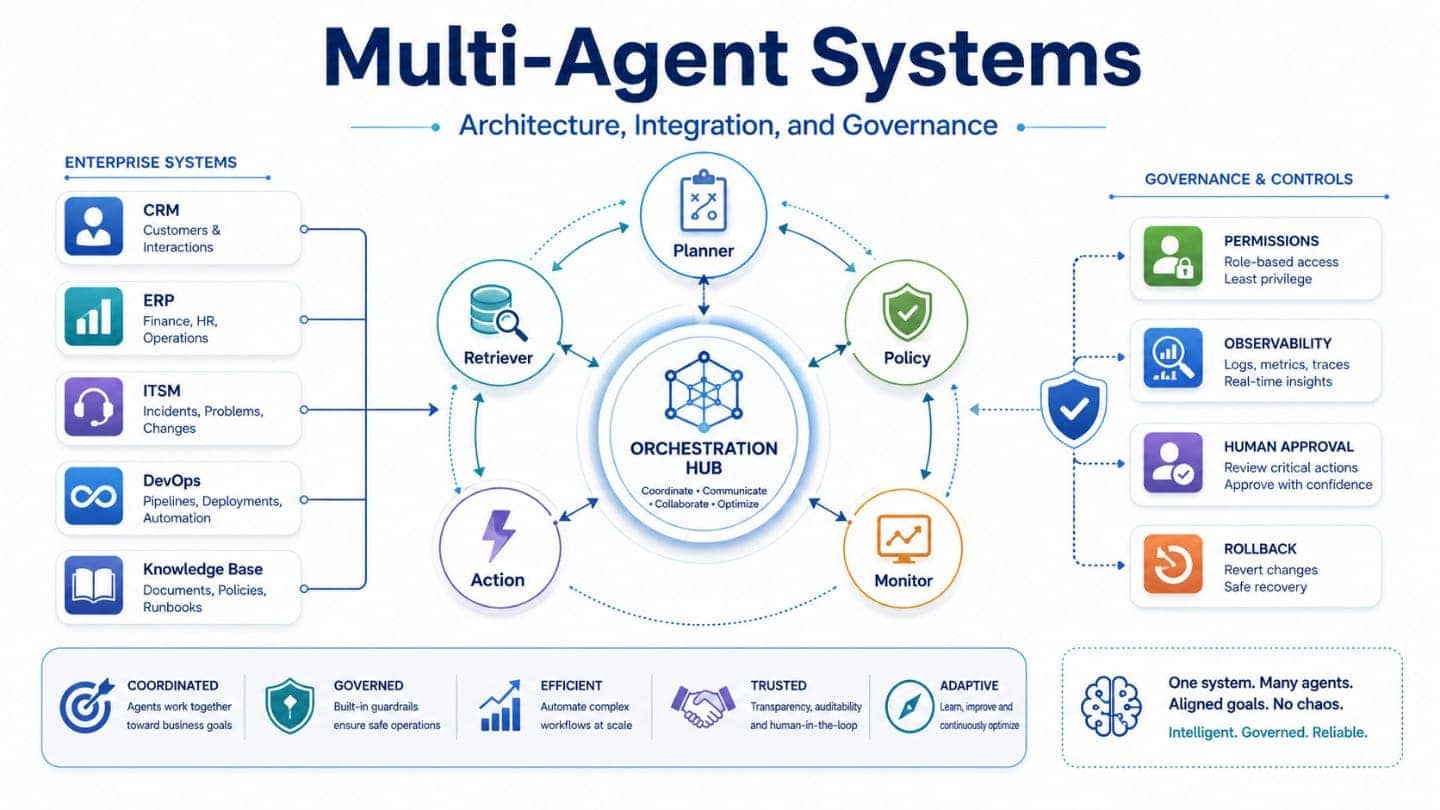
In terms of productivity, Opsima proves overwhelming innovation that elevates traditional operational methods by more than 10 times. Conventional low-code platforms or RPA solutions required developers with a thorough understanding of business logic to design sophisticated drag-and-drop workflows in advance, presenting structural limitations where requests ultimately returned to IT department queues if complex libraries unsupported by the platform were needed. In contrast, Opsima requires users only to describe problems they wish to solve in natural language, whereupon the Discovery agent acting as a core pillar of the multi-agent architecture interviews users to derive exact specifications, and the Execution agent implements them into actual code. As integration projects and dashboard construction periods that previously took 6 to 24 months are compressed into daily units, field leaders become empowered to make immediate, unhindered real-time decisions. The self-correcting process is completed through the continuous circulation of a five-stage agentic loop consisting of sensing, deciding, executing, reviewing, and improving. Of course, the advancement of real-time verification layers to cut off agent misjudgment probabilities at source points amidst exceptional situations, combined with specialized speech and language processing model tuning that perfectly structures rough radio voice audio and unstructured messenger text into structured data, will serve as even more powerful weapons as the platform expands into numerous industrial fields worldwide.
The greatest barriers blocking AI solution adoption in the enterprise market are security and governance issues. When employees indiscriminately utilize consumer-grade AI coding tools to build unverified automation apps, entire enterprises become exposed to severe shadow IT risks and security vulnerabilities. According to Gartner analyses, a significant portion of agentic AI projects lacking proper governance founder due to risk management failures. To directly break through this challenge, Opsima has established industry-leading robust governance layers and a staging-first architecture. Solutions generated by all autonomous agents are built exclusively within staging environments completely isolated from actual production environments, undergoing thorough reviews by risk assessment agents. Because all developed codes must pass IT administrator approval gates before finally being deployed to production, security risks inflicted upon corporate core infrastructures converge to zero. Supporting seamless bidirectional real-time integration without requiring separate migration work or existing system shutdowns even with complex legacy systems utilized by global major enterprises such as SAP, Maximo, Navis, and AS400, corporations can achieve the safest and fastest digital innovation while preserving their existing infrastructures intact.
Taken altogether, Opsima goes beyond a tool satisfying simple technical curiosity to function as a powerful platform fundamentally transforming corporate constitutions as an enterprise-standard infrastructure. Even within a red ocean market filled with numerous automation tools, successfully resolving field data blind spots and establishing agentic workflows grounded in thorough governance opens new horizons for IT and management leaders worldwide. If you wish to simultaneously achieve overwhelming digital transformation speeds years ahead of competitors and maximize profitability, we highly recommend checking out Opsima's innovative technological world directly right now. More detailed information and specific introduction guides can be found directly at the official live link https://opsima.com/blog/ko/industry-insights/agentic-workflow-automation-industrial-it/ .
