The global tech industry is expanding the horizons of artificial intelligence beyond software and the cloud into the massive physical reality of manufacturing plants. While the blueprint of Industry 4.0 spent a long time lingering on flashy presentation slides, the advent of autonomous agents that cook massive field data in real-time and make independent judgments has truly opened the door to a manufacturing revolution. At the center of this movement, showing the most disruptive technical moats and practical utility, is Agnotic AI. This article provides an in-depth analysis of how Agnotic AI breaks through the complexities and security demands of the manufacturing floor to bring overwhelming business innovation to enterprises.
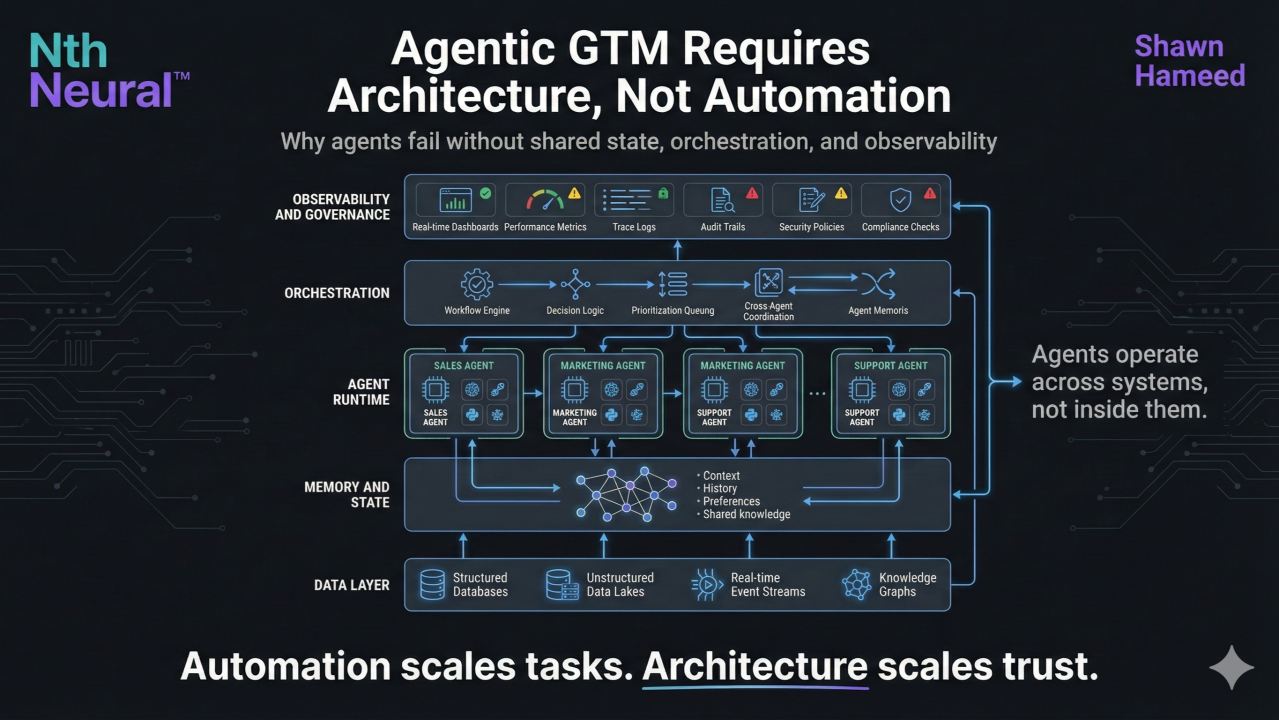
The manufacturing floor is notoriously the trickiest and most brutal battlefield for software engineers. MES and ERP records have been fragmented for decades, machine and historian telemetry gush at high frequencies, and formats vary wildly across vendors. Add standard operating procedures and complex quality inspection results, and operators and engineers inevitably drown in a sea of data. Traditional general-purpose chatbots or web-based conversational models fail to grasp this operational specificity, leading to inaccurate answers where a single mistake on the factory line translates directly into massive financial loss and safety incidents. Agnotic AI departs precisely from this point, offering a purpose-built AI assistant that completely breaks away from the conventional chatbot structure.
The crown jewel of the core architecture implemented by Agnotic AI is a sophisticated retrieval-augmentation layer deeply grounded in real operational data. When a floor operator poses an immediate question right at the production line, the system instantly cross-references fragmented documents and live records to deliver precise guidance. Capturing defect trends in real-time and automatically generating shift reports based on live data drastically compresses the monitoring overhead for floor managers. By seamlessly integrating heterogeneous high-frequency data environments to streamline the entire workflow from data collection and analysis to report generation, this technology acts as an intelligent core for the entire process beyond simple administrative assistance.
In terms of autonomous monetization, Agnotic AI plays a decisive role in defending against invisible losses faced by manufacturers and creating new value. By directly integrating massive MES and ERP data within the process, the solution drives real-time optimization of the production line, unlocking an estimated 12 million dollars in annual productivity value and drastic reductions in downtime. By proactively predicting defect rates based on actual process data and cutting off the root causes of quality flaws, it perfectly defends against indirect revenue losses. The potential to expand into additional revenue models—such as evolving beyond a one-time build model into a cloud-based subscription SaaS model and linking risk-hedging insurance products tied to predictive maintenance results—remains limitless.
The presence of Agnotic AI is equally peerless in the realm of operational cost reduction. By drastically cutting the human man-hours spent by floor operators manually drafting shift reports or cross-referencing massive equipment history data, enterprises can achieve an annual operating cost reduction of up to 4.5 million dollars. It fundamentally blocks massive equipment loss expenses caused by manual data entry errors or misjudgments. Adopting a structure where the solution is deployed directly inside the enterprise's own network infrastructure—namely on-premises and VPC environments to maintain strict security—completely eliminates concerns over external data leaks. Infrastructure overhead during initial deployment is optimized through a standardized hybrid architecture, continually evolving to maximize cost-efficiency.
Metrics highlighting 10x productivity innovation are demonstrated even more dramatically on the shop floor. Through retrieval-augmentation technology that allows operators to instantly ask questions and receive immediate standard operating procedure answers right at the line without rummaging through complex manuals, task processing speed improves by over 12 times compared to legacy methods. As painful manual workflows in data collection, analysis, and report generation become fully automated, engineers are liberated to focus on more creative and advanced process improvement tasks. Throughout critical decision-making stages, guardrail systems designed to constantly prompt human expert intervention remain active to strictly control risks arising from AI hallucinations or false positives.
Of course, completely overcoming the high entry barriers of a specialized legacy market like manufacturing requires ongoing technological refinement. To capture conservative large manufacturing conglomerates and mid-sized smart factory markets, success stories from reference plants must be meticulously quantified and presented with clear ROI metrics. Additionally, enhancing voice-based natural language interfaces to minimize operator prompt skill discrepancies and expanding inter-agent collaborative workflows remain tasks for Agnotic AI to conquer. Nevertheless, the technical polish and field-centric practicality demonstrated by this solution have already forged new territory previously unreachable by traditional industrial AI.
If you want to prove the true value of Industry 4.0 not through slides, but through the overwhelming productivity of a living, breathing factory, the blueprint presented by Agnotic AI is not merely an option but an essential turning point. Face the future where every process on the floor is under the flawless control of intelligent agents at your fingertips, without ever compromising data security. Visit the official platform right now at
https://www.agnotic.com/services/manufacturing-ai-agent-development to witness firsthand the innovative potential of the next-generation AI agent that will completely transform your manufacturing operations.
